
In 2010, the Manawatū Turbos, facing financial difficulties, were in danger of folding. A bailout from Higgins Construction and the local community provided a lifeline.
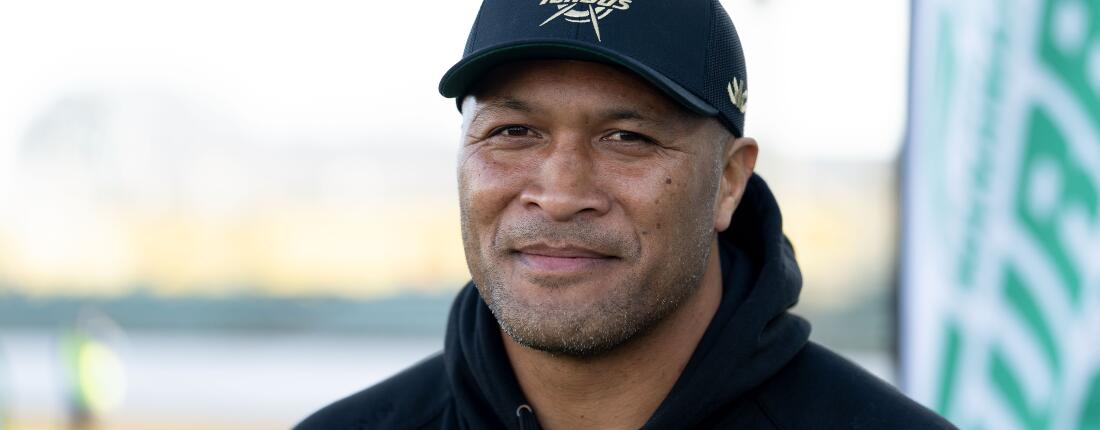
It's a gesture Johnny Leota never forgot. In 2026, the 140th anniversary of Manawatū rugby, the midfield back who played 62 games for the Turbos between 2004 and 2011 is back as Assistant Coach and Manawatū Rugby Coach Development Lead.
After 15 years with the Sale Sharks in Manchester, most recently as senior academy coach, Leota assists Black Ferns Rugby World Cup-winning coach Wesley Clarke, who coached Manawatū in Leota’s final playing season.
“It's good to be back to give back. Manawatū is where my rugby journey started, a place of familiarity and opportunity,” Leota said.
"I'm excited by this Manawatū team. We have many Super Rugby players who bring confidence and experience, while some young talent is promising. Regarding coach development, I look forward to sharing my experiences and ideas to harness the talent we have and encourage others to take coaching more seriously."
"I didn't expect to be back in Palmerston North this year, but with my wife and five kids in New Zealand, I struggled with the long-distance relationship; long days, silence, and missing little moments watching my kids grow up."
Johnny's wife is former Silver Fern Liana Leota, who played 41 Tests for her country and won a gold medal at the 2010 Delhi Commonwealth Games.
After playing for the Manchester Thunder and Severn Stars, Liana moved into coaching with the Leeds Rhinos in the UK Super League and then the English national team. In 2025 she took a position with Southern Steel in Invercargill.
Highlights of Johnny’s career with Manawatū included being part of the first team that played under the Turbos mantra in 2006. In 2008, a win over NPC champions Canterbury (25-24) in Christchurch was a first in the Garden City since 1981 and would be the last until 2019. In 2010 he was part of a side that slayed Otago 46-24, their biggest win in that fixture since 1981. In 2011 Manawatū made the championship final, Leota achieving six of his 16 victories in the green and white hopes that season.
Leota played 20 Tests for Samoa, including a memorable 26-19 win against Wales in Cardiff in which he scored a try. He attended the 2015 Rugby World Cup having four months earlier played the historic first, and so far only, Test between the All Blacks and Samoa in Apia.
With the Sale Sharks, he played 135 games between 2011 and 2019, scoring 27 tries. He played with the likes of Springboks Rugby World Cup winner Faf De Klerk, British and Irish Lions Dwayne Peel, Mark Cueto and Chris Cusiter, Wallaby and Crusaders Super Rugby Pacific winner James O’Connor and All Blacks Sam Tuitupou and Daniel Braid.
Upon retirement from playing, Leota served Sale as a player liaison, skills coach in the junior academy, lead Under-18s Coach, women’s defence coach and finally senior academy coach.
“Sale is a well-oiled machine," Leota said. "Everyone has a specialised area and greater resources. Here in Manawatū we’re smaller. Everyone wears two or three hats and covers multiple areas. That creates a versatile skillset but means you work harder or must prioritise some things over others."
Sale’s academy starts with a teenage player development group designed to identify and develop players with the potential to progress towards the professional game. Players selected are not always the most dominant in their age group; rather, they are those who show behaviours that can translate to higher levels of rugby.
The junior academy is for roughly 50 players aged between 16 and 18 with a focus on physical fitness, positional and situational awareness complemented by expert nutritional advice and mental preparatory skills. Finally, the senior academy focuses on young professionals fully integrated into first team training at the Sharks.
“Rugby in England is tactically very different to New Zealand. Everybody grows up kicking a ball because football is the culture. Kicking to space, dominating territory and deliberate sequences with possession are more common than our approach of playing what’s in front of you and having a crack from everywhere.
“I’ve learnt that balancing those two approaches is good. I’d like the ball to be in play more in the game. That’s something we can improve. I like players to have a crack but also enjoy a good kick contest and see benefits in things I didn’t before.”
That open-minded approach has helped Leota influence recent England Under-20 selections like Ollie Davies, Dom Hanson and Seb Kelly.
Back in Palmerston North, Leota is encouraging coaches to discover the answer to the question: what makes a good coach?
“That’s my question to the coaches. What makes a good coach? I want coaches to understand their strengths, what makes them click, rather than telling them how to coach,” Leota explained.
“The most common questions I get are around systems of attack and defence. How do I upskill there? I’m really open to discussing those ideas and have some extensive background in that. Pathway is another one. How do I advance? Providing advice or creating opportunities in that space is important.”
What’s the most important factor in the Turbos having a successful NPC campaign?
“Winning collisions and creating opportunities with our skills from that,” Leota answered.
“A strength of ours is strong ball-carrying forwards. Guys like TK Howden and Brayden Iose have a lot of Super Rugby experience and can create real momentum if they get front-foot ball. Out wide we’ve got some exciting young talent if we can utilise it.”
Manawatū didn’t fulfil that brief for the first 150 minutes of their season, being soundly beaten by Northland 40-14 in Whangārei in round one. On Sunday, Manawatū trailed Southland 28-7 five minutes into the second half and were down 35-19 with 10 minutes to play.
Facing an embarrassing defeat, the Turbos caught fire and rallied with a Brayden Iose try on fulltime to prevail 36-35. First-five Reece Macdonald had a blinder with two tries and centre Kyle Brown was consistently threatening.
Manawatū hosts Otago on Saturday night.